
Thoughts and prayers for political and climate disasters
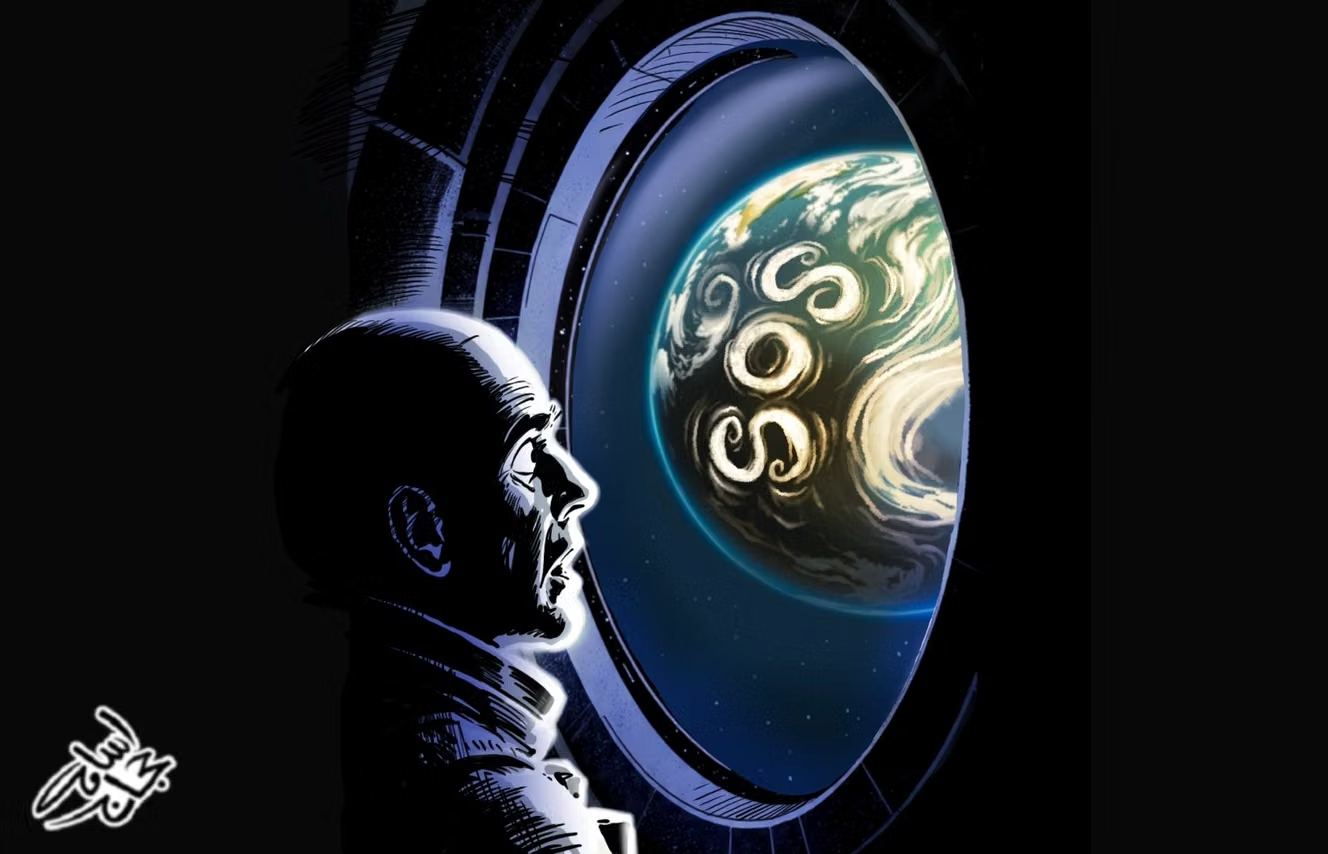
This cartoon by Osama Hajjaj was published on the front page of Le Monde on April 7, 2026
On Wednesday, the 26th of August 2026, a colossal block of ice from the top of the Himalayas tumbled towards the valleys below, triggering an inescapable flood in Nepal and Tibet. Thousands of people were left with nothing, and many hundreds died, in apocalyptic scenes. As expected, as many Western tourists tragically lost their lives, mass media extensively reported on this incredible event, rarely, if ever, mentioning what caused such an unthinkable disaster. It was less unexpected than it seems, as this type of event was clearly predicted by numerous scientists in peer-reviewed studies, in a chorus of unprecedented unanimity in scientific research. For example, a study published in Nature shows that glaciers in the Himalayas are rapidly melting and retreating under the direct impact of climate change. This is leading to the widespread formation and expansion of glacial lakes and has significantly increased the frequency of glacial lake outbursts and cataclysmic floods. This is exactly what happened now.
In Europe, an unprecedented summer brought killer heat, sparking a wave of forest fires, destruction, and deaths. The word “unprecedented” is devalued and distorted, as the media often presents deadly heatwaves as new opportunities to enjoy time at the beach. This type of idiotic reporting is rarely called out, as it may be the case of reports presenting an incoming tornado as a perfect opportunity to fly your favourite kite. It is probably a reflex of propaganda fuelled by Big Oil, a well-documented source of confusion, misinformation, cultivated ignorance and delusions on the impact of burning fossil fuels.
The European summer was matched by an unprecedentedly warm winter in Australia. National media reports that a “spring scorcher to follow record warm winter”, and we can easily predict a very intense – and devastating – summer. Once again, the frequency with which the word “unprecedented” is used to describe our weather and climate should be a serious cause for alarm and a reason to stop and think about what has gone so wrong with our models. It isn’t. At all.
The summer is fast approaching, and politicians, and their anti-leadership conduct and hypocrisy, are more focused on the significant increase of data centers, the source of a massive and criminally dangerous increase in pollution, greenhouse emissions and acceleration of climate disruption. In fact, political leaders in Australia insist on proving that they are no different from the lobbyist-fueled class of politicians across the world, and compete, as the ABC News noted, to create a “data centre boom“. I painstakingly document in my latest book, Higher Education in the Age of Artificial Intelligence, how destructive the AI hype and colonisation are through the mushrooming of massive data centres. Their massive impact on freshwater resources is rarely addressed in the political discourse, even when their effects on pollution, greenhouse gas emissions, noise, and community disruption are discussed. To see the concerted action to increase the already too large number of these destructive surveillance facilities in a country famously known for limited resources of water and severe droughts is another level of insanity and human self-harming idiocy.
At the moment, political leaders across the world express their sorrow, horror, shock or feigned surprise at the latest climate-change-induced disaster. In Australia, this spectacle is not linked to public concern about the acceleration of these disasters, nor to a call for a sane set of solutions to address the climate crisis and the predictable tragedies ahead. There is already no hope of logic or decency from a morally corrupt class for anyone who is loosely paying attention to what is happening in our public life. So we can find some help in the institutions largely funded from our taxes, on public money, to act independently as prominent centers of intellectual life and ethical guidance: our universities. Their aloof disconnect from public life and responsibilities, from most relevant issues to the Polis, or their manifest incapacity to act independently and to go beyond the latest fads and corporate agendas, represent topics for my books and other posts. But what is remarkable is that even the most well-intentioned university leaders of this declining institution posted, just like our depressing politicians, just their “thoughts and prayers” for those affected, for those killed indirectly by their own indifference. How can they talk against the technofacist corporate colonisation that is responsible for the acceleration of climate disasters and decline of our civility and culture, when the record shows their irrational enthusiasm for this agenda? So we will hear again, ad nauseam, how these amoral failures talk about their thoughts and prayers, not even pretending that anyone can actually believe their words. In time, this comes with a cost, and loss of public trust and credibility spells the end of current arrangements. The incoming crisis, of climate, social contract, civility and politics, makes staus quo impossible.
Australians may remember these days of politicians’ enthusiasm for a “data centers boom” this summer, when uncontrollable fires, floods and violent storms will hit cities and communities. In the near future, when water becomes scarce and clean air becomes a rare commodity, it will be impossible for most to remain apathetic when we will hear again the hypocrites sending us thoughts and prayers for those affected by what they caused. Not only politicians, but our sedated, clique-infested and irresponsible universities will have to deal with it.
The book Higher Education in the Age of AI is available to purchase on the EEP website or Amazon

